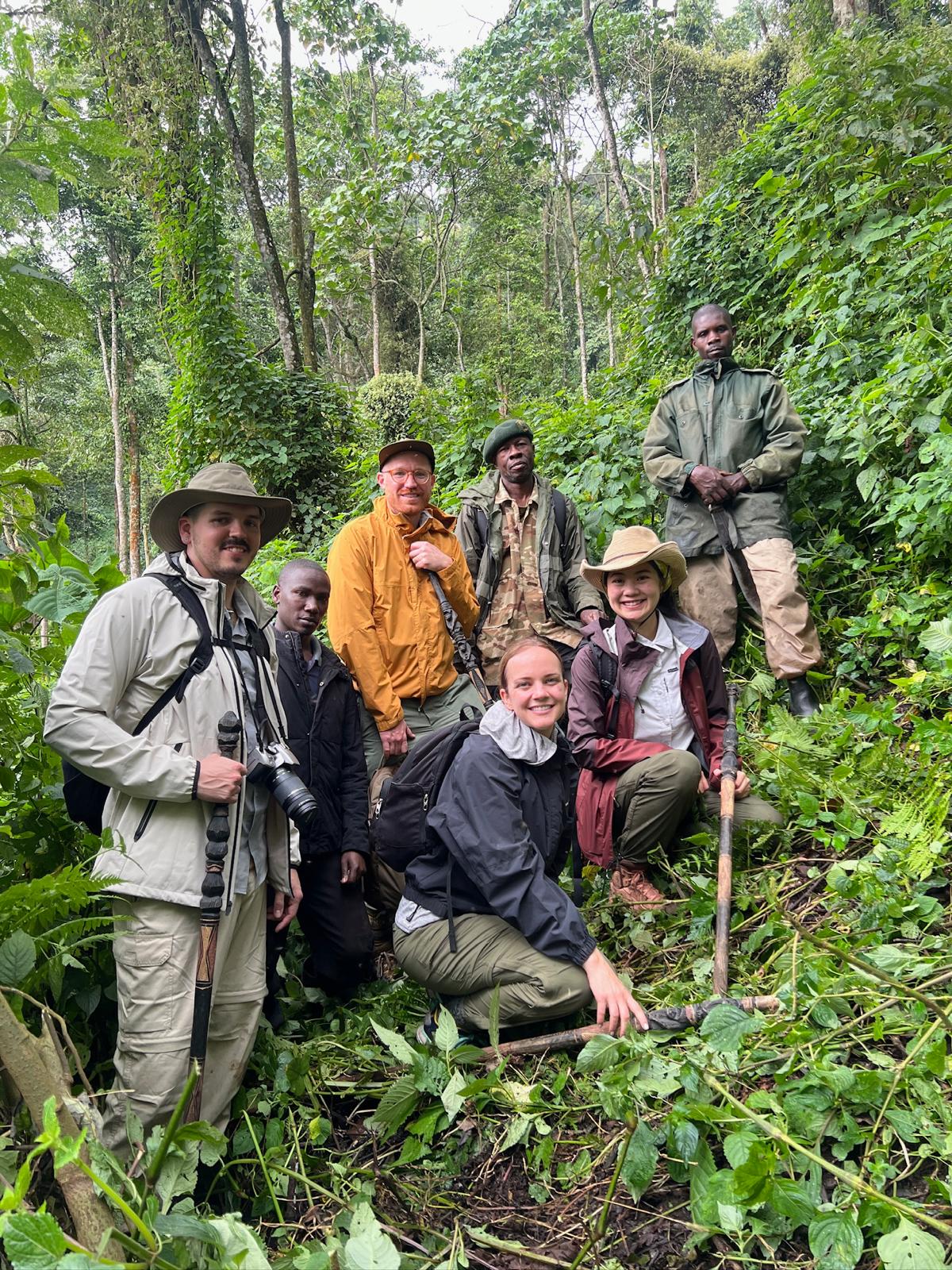
The Susa gorilla group, also known as Susa A or Kurira, holds a central place in mountain gorilla conservation history in Volcanoes National Park. First identified by Dian Fossey and her team in 1978, Susa was the group she used for much of her own research before her death in 1985, giving the family a direct link to the origins of gorilla conservation in the Virunga region.
Origin of the Name
The family takes its name from the nearby Susa River, which runs through the area where the group lives. This location is one of the more remote and difficult to access within the park, making Susa one of the more physically demanding families to trek.
A Family That Has Changed Dramatically Over Time
Susa was originally made up of 44 members, the largest gorilla family ever recorded in the Virunga region. Over the years, repeated splits, internal conflict, and separations reduced the group considerably, first to 28 members and eventually to its current size of 18, including 3 silverbacks, 3 blackbacks, 4 adult females, 2 sub-adult males, 1 juvenile, and 5 infants, led by dominant silverback Kurira since 1999.
These splits over the years produced several new gorilla families, most notably Karisimbi (also known as Susa B), which itself later split further to form the Isimbi family.
The Susa Twins
Susa is the only known gorilla family to have produced two sets of twins: Impano and Byishimo, born in 2004, and Impeta and Umudende, born in 2011, though Impeta died in 2015. Watching young gorillas play and move between tree branches is one of the more memorable parts of trekking this family.
A Difficult Chapter: The 2002 Poaching Tragedy
In May 2002, the Susa family was the target of a poaching incident in which two adult females died defending two infant gorillas from poachers attempting to capture them for illegal sale. The tragedy remains part of the family’s history and a stark reminder of the risks gorillas continue to face even within protected areas.
Trekking the Susa Family
Trekking Susa is considered one of the more demanding experiences in Volcanoes National Park, given the family’s remote location, but it remains one of the most requested treks thanks to its historical significance and the chance to observe younger members of the group.
With direct ties to Dian Fossey’s original research and one of the more eventful histories of any Volcanoes National Park family, Susa offers a trek shaped by real conservation history. Book your gorilla trekking permit with our team today, and we’ll help you plan the trek alongside the rest of your Rwanda itinerary.